
Government
New housing project bolsters city’s vision for future of San Antonio
By Marcus Chen
Advertisement · Why this ad?
Katherine oversees editorial operations across all six brands. Before joining The Meridan Group, she spent 14 years at the Minneapolis Star Tribune, where she led the metro desk through its digital transformation. She holds a Master's in Journalism from Northwestern's Medill School.
More from Katherine →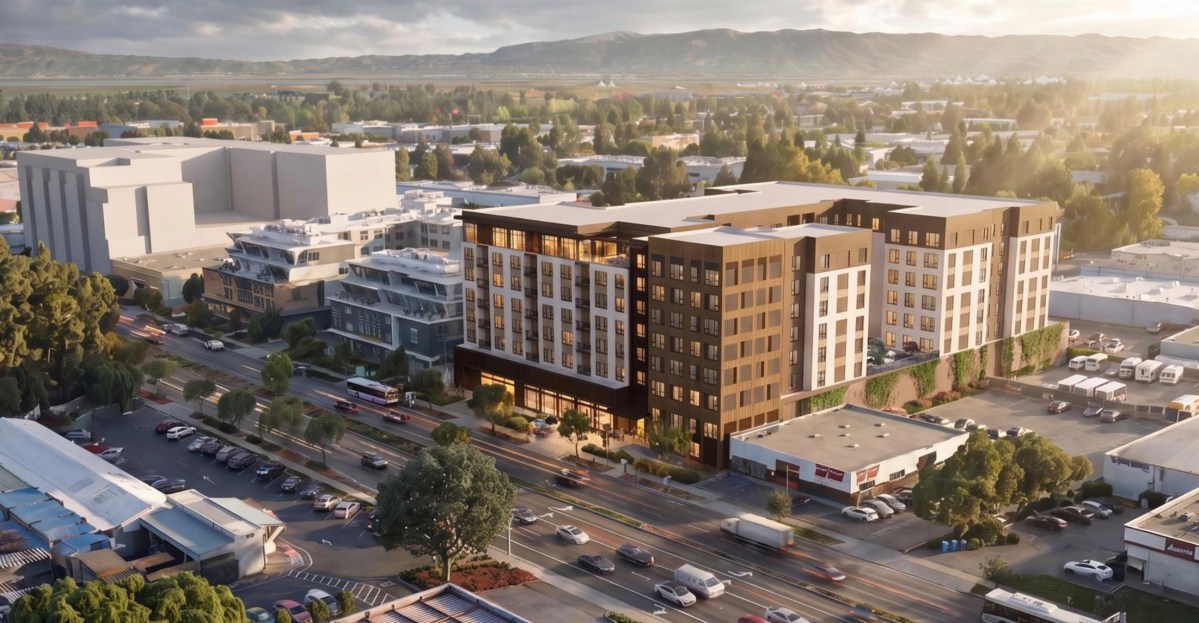
The familiar hum of construction equipment is becoming a constant soundtrack along San Antonio Road, a thoroughfare poised for significant transformation in Palo Alto. A recent proposal to demolish three existing commercial buildings and erect a 200-apartment complex at 720 San Antonio Road, near the Mountain View border, signals the accelerating pace of this shift and underscores the city’s commitment to reshaping the area into a residential hub. The project, presented to the City Council on Monday, represents both progress toward Palo Alto’s vision and a complex challenge as the city attempts to reconcile evolving development standards with burgeoning construction.
High Street Residential’s proposal envisions an 89-foot-tall building featuring six floors of apartments above two floors dedicated to parking and amenities. The complex would include a co-working space, fitness room, a pool lounge, and a club room, designed to cater to the modern work-from-home lifestyle. According to John Kosi, principal at BDE Architecture, the co-working space is intended to provide residents with a place to conduct business and collaborate, making it an integral part of the new living environment. “The co-working space is for the residents to do the work from home in this new era,” Kosi said. “They can have meetings there, there will be different offices there, they will have all the stuff they need to really run their business when they’re working from home.” The proposed development includes 113 one-bedroom units, 44 two-bedroom units, 25 studios, and 18 three-bedroom units. Among these, 30 units would be designated as below-market-rate, including 18 for very-low-income households and 12 for moderate-income households. The project requires a zone change from commercial to “planned home zoning” to proceed, granting the city considerable influence in shaping the final design.
The proposal arrives amidst a flurry of residential development proposals along San Antonio Road. The city is currently reviewing plans for a 168-apartment complex at 788 San Antonio Road, a 174-unit complex at 800 San Antonio, a 25-unit complex at 824 San Antonio, and a proposal to replace Magnussen Toyota with 66 townhomes. These developments are occurring concurrently with the city’s ongoing work on the San Antonio Road Area Plan, a comprehensive document intended to establish development standards and propose improvements for parks, retail, and transportation infrastructure. The current proposal would replace three commercial buildings, including the site of Crossroads Specialty Market, which Brian Schmidt, vice president of High Street Residential, described as “ultimately underutilized” and not reflective of the city’s broader vision. “It’s a well occupied but ultimately underutilized site and one that doesn’t reflect the vision of the San Antonio Road Area Plan.” Schmidt said.
While the council generally expressed support for the project, concerns were raised regarding the lack of ground-floor retail space and the adequacy of parking. Councilmember Julie Lythcott-Haims acknowledged the dilemma posed by the ongoing San Antonio Road Area Plan process, noting that while the project is timely, the city must remain deliberate in its approach. “You’re coming forward now, which is wonderful, but the San Antonio area plan process is underway and not complete,” Lythcott-Haims said. “It’s sort of like you’re approaching the tarmac and we’re still building the airport, which is terrifying but also exciting.” The proposal includes 217 parking spaces for cars, falling short of the 276 required by current zoning codes, alongside 148 spaces for bicycles.
The City Council’s response reflected a duality of excitement and caution. While acknowledging the progress towards the city’s stated goals of increasing housing density, members also expressed concern about the potential for these developments to outpace the evolving San Antonio Road Area Plan. The lack of ground-floor retail was a recurring theme in the discussion, with council members emphasizing the need to create a vibrant and accessible community for residents. As Councilmember Reckdahl stated, “We don’t want to have a retail desert here, so I really think we do need to have some way to put in ground-floor retail here.” The project’s proximity to the Mountain View border also underscores the broader regional implications of Palo Alto’s housing policies.
The San Antonio Road Area Plan is a crucial element in shaping the future of this evolving corridor. It represents a deliberate effort to ensure that new developments align with the city’s long-term vision for the area, not just in terms of housing density but also in terms of community amenities and transportation infrastructure. The plan’s ongoing development underscores the challenges of balancing rapid growth with thoughtful planning, and the council’s concerns about the current proposal highlight the importance of maintaining a cohesive and well-integrated community. City of Palo Alto is actively working on this plan.
To enable the project, the developer is seeking a zone change from commercial to “planned home zoning,” a designation that allows residential use and provides the city with significant leverage to demand revisions. The council members’ requests for changes reflect the complex nature of the development process. Brian Schmidt stated that the primary focus of the project is “to increase the capacity of housing in an area that is mainly low-density commercial, directly tying into the goals of the proposed San Antonio Road Area Plan” and to help the city meet its housing goals. The developer will likely need to address concerns regarding ground-floor retail, parking availability, and the number of affordable housing units.
The flurry of development along San Antonio Road is a tangible representation of Palo Alto’s commitment to addressing the region’s housing shortage. While the sheer volume of proposals is encouraging, it also underscores the importance of thoughtful planning and a steadfast adherence to principles that foster strong communities. The need for affordable housing is also paramount, as ensuring that our community remains accessible to individuals of all income levels is essential for maintaining its vibrancy and diversity. Palo Alto Unified School District provides valuable resources and programs for families in the area.
The current situation highlights a broader challenge facing many communities – balancing the urgency of addressing housing needs with the long-term vision of creating sustainable and thriving neighborhoods. It’s a reminder that true progress isn't simply about erecting buildings; it’s about fostering a sense of belonging and ensuring that new developments contribute positively to the fabric of our community. Continued dialogue and collaboration between residents, developers, and city leaders will be essential as this vision unfolds, ensuring that San Antonio Road becomes a place where families can flourish and neighbors can connect for generations to come. City of Mountain View is also impacted by the development in Palo Alto.
The co-working spaces included in these new complexes are a sign of the times, but also a subtle reminder of the challenges facing families. While flexibility in work arrangements can be a blessing, it also requires intentionality in maintaining healthy boundaries and nurturing relationships. As we adapt to this new era of remote work, it’s more important than ever to prioritize family time and community engagement.
Closing paragraph: The transformation of San Antonio Road represents a significant chapter in Palo Alto’s ongoing story. While challenges undoubtedly lie ahead, the city’s commitment to addressing its housing needs and fostering a vibrant community offers a foundation for a bright future. Mountain View Voice provides ongoing coverage of local developments.
By Marcus Chen

By Marcus Chen

By Marcus Chen

By Katherine Langford